Automotive
A prime location for global car manufacturers
A prime location for global car manufacturers
The automotive industry serves as a cornerstone of Northern Vietnam’s infrastructure development, attracting leading global manufacturers.
Post-COVID era witnessed a pivotal moment in Vietnam’s automotive market, with a remarkable EV/hybrid boom and the joining of new international players. The total sales of the automotive market in 2024 saw an increase of 22% compared to the previous year. Additionally, sales performance in the first half of 2025 also surpasses the same period of 2024 by almost 20%. In the ASEAN-6, Vietnam stands out with a total industry volume (TIV) growth of 22%, only second after Singapore (PwC).
The largest portion of the pie belongs to EV, particularly domestic manufacturer Vinfast’s, whose facility is located in Hai Phong. Vietnam also welcomed seven new international automotive brands in 2024, proving that the market is increasingly attracting foreign direct investment (FDI).
These developments are results of favorable government policies, strong breakthroughs of electric and hybrid models, and potential from the domestic market.
There have been a lot of changes to the new car consumption in the top five major markets in Southeast Asia. Vietnam, with the highest growth rate of 22% in 2024, shows huge potential for demand in the future as the population is young and disposable incomes increase (VnExpress).
By 2030, the Ministry of Industry and Trade expects the total sales to reach 1,000,000 – 1,100,000 units and completely knocked-down (CKD) vehicles take up approximately 70%. By 2045, the total sales are expected to reach 5.000.000 – 5.700.000 units and CKD vehicles take up approximately 85% (VnEconomy).
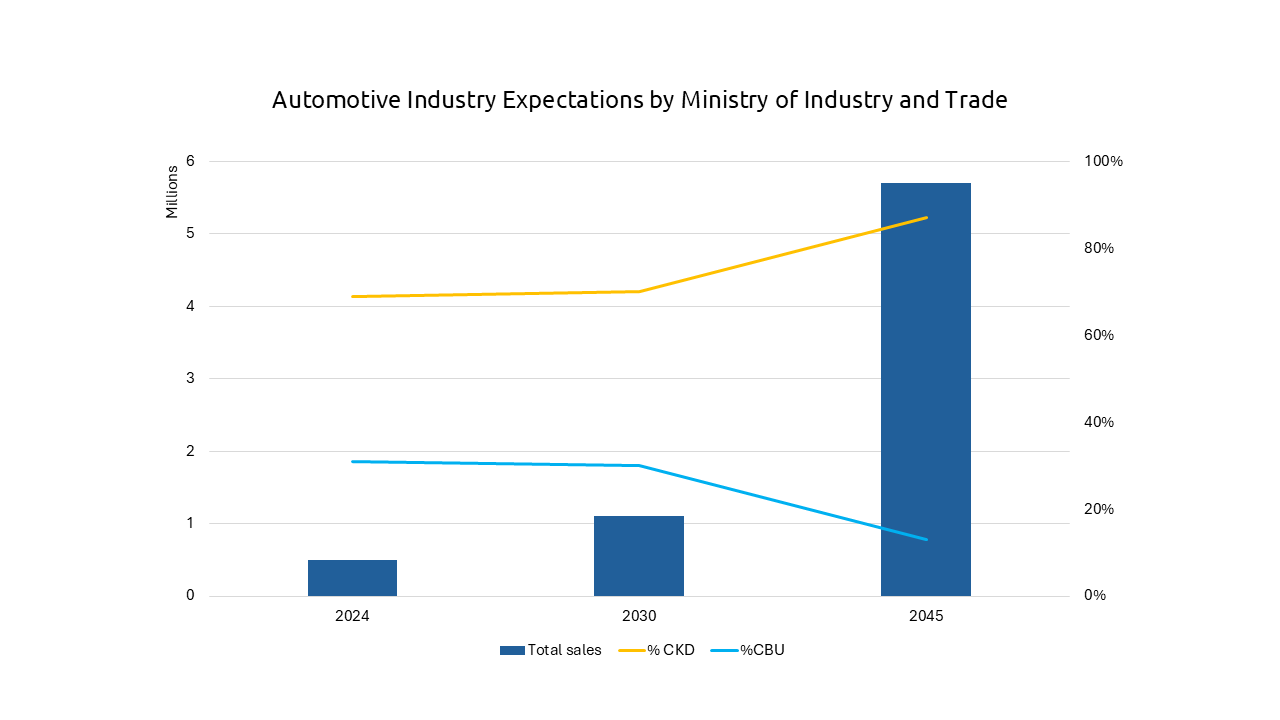
Source: VnExpress
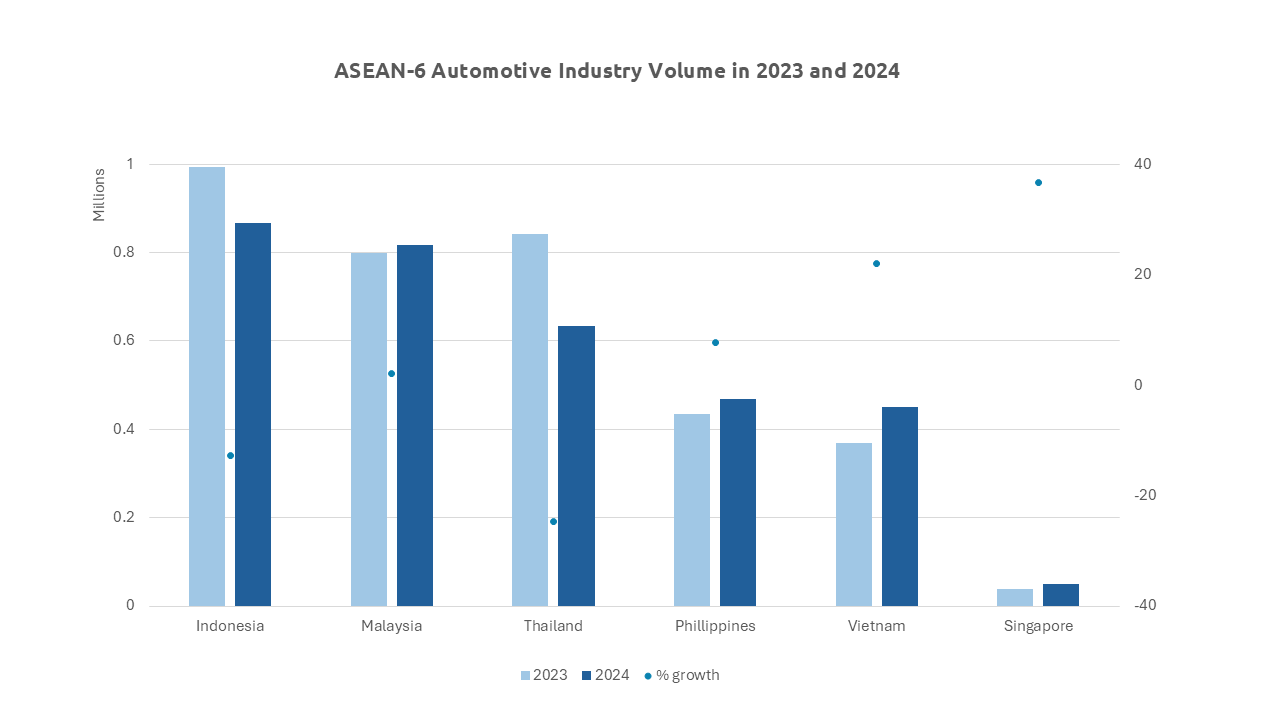
Source: VnEconomy
One of the key factors that boosts Vietnam’s automotive industry in recent years are the favorable government policies. These include policies that encourage consumption from consumers and assembling capacity from manufacturers, especially for the EV sector.
| Year | Regulatory | Details |
| 2015 | Decree 111/2015 | Corporate tax incentives for supporting industries |
| 2016 | Decree 122/2016 | Import tax exemption for components if car manufacturers commit to assembling a minimum of 3,000 units per model |
| 2017 | Decree 116/2017 | Increased administrative procedures for fully assembled imported vehicles |
| 2018 | ASEAN Trade in Goods Agreement (ATIGA) | 0% import tax on vehicles |
| 2020 | Decree 70/2020/ND-CP | 50% reduction in registration fees for domestically assembled cars (June 2020 to December 2020) |
| 2021 | Decree 103/2021/ND-CP | 50% reduction in registration fees for domestically assembled cars (December 2021 to May 2022) |
| 2022 | Decree 10/2022/ ND-CP | Full exemption on EV registration fees for three years, followed by a 50% reduction for the subsequent two years (January 2022 to January 2025) |
| 2023 | Decree 41/2023/ND-CP | 50% reduction in registration fees for domestically assembled cars (July 2023 to December 2023) |
| 2024 | Decree 109/2024/ND-CP | 50% reduction in registration fees for domestically assembled cars (September 2024 to November 2024) |
| 2025 | Decree 51/2025/ND-CP | Full exemption on EV registration fees for two years (March 2025 – February 2027) |
Source: VnExpress
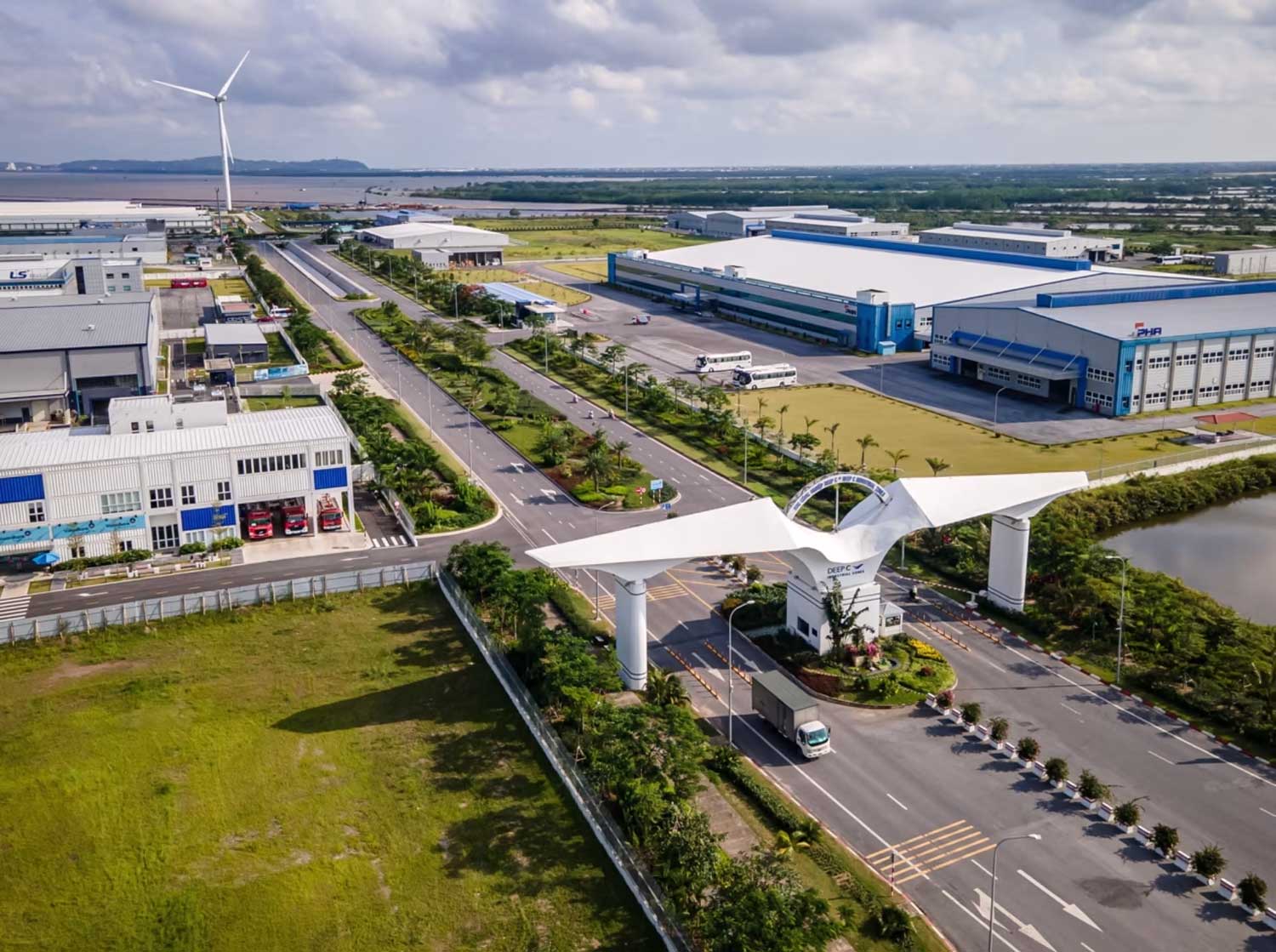
Discover why DEEP C Industrial Zones are a trusted partner for your next investment:

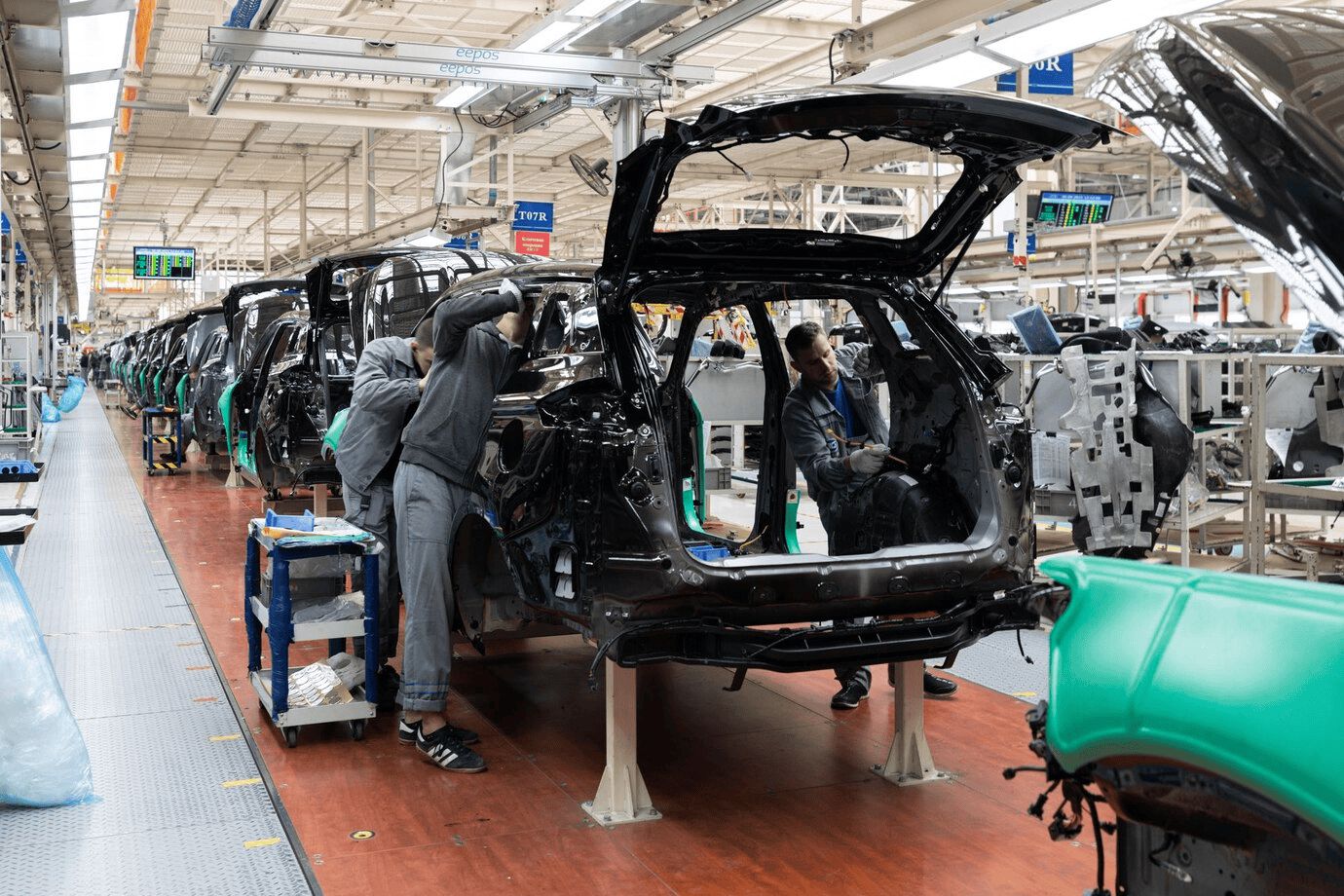

Case Study
Pyeong Hwa Automotive (PHA) – a global leader in automotive door-moving systems
Key Highlights: