General Manufacturing
Moving Vietnam’s manufacturing up the value chain.
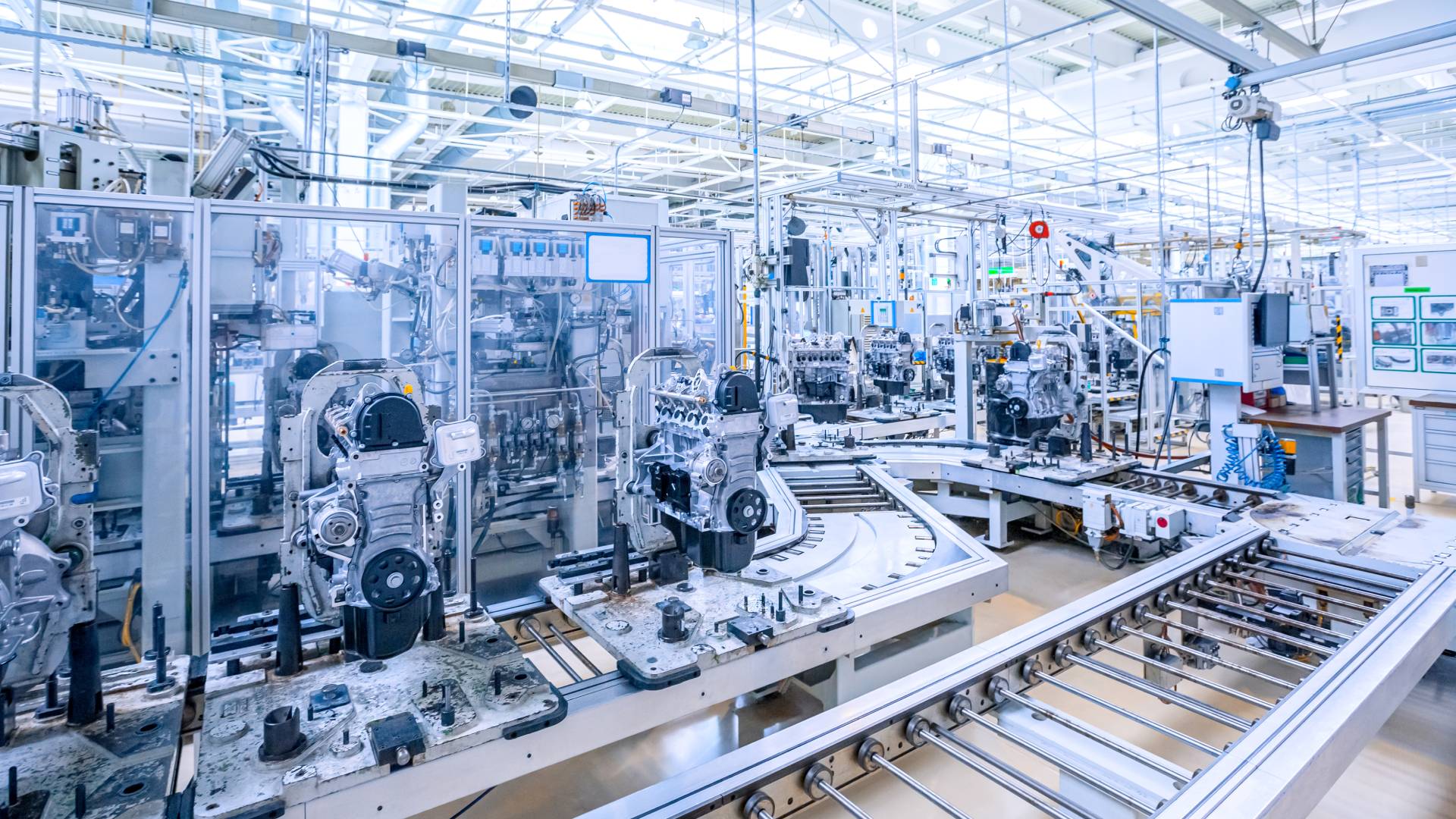
Moving Vietnam’s manufacturing up the value chain.
Vietnam enters 2025 with a clear focus: attracting high-quality investment to move its manufacturing sector further up the global value chain.
Over the past decade, Vietnam has developed from primarily a low-cost assembly base into one of Asia’s rising hubs for more advanced manufacturing. Vietnam is no longer only a “good-to-have” extension of supply chain and procurement strategy, but it is positioning itself as a competitive, innovation-driven industrial center. As regional integration deepens, the country is becoming a strategic link between ASEAN, East Asia, and South Asia, making it an essential node for diversified global supply chains.
Manufacturers are no longer asking whether to enter Vietnam, but how best to build, automate, and integrate operations here. Local enterprises are also progressing from subcontracting toward producing export-ready components.
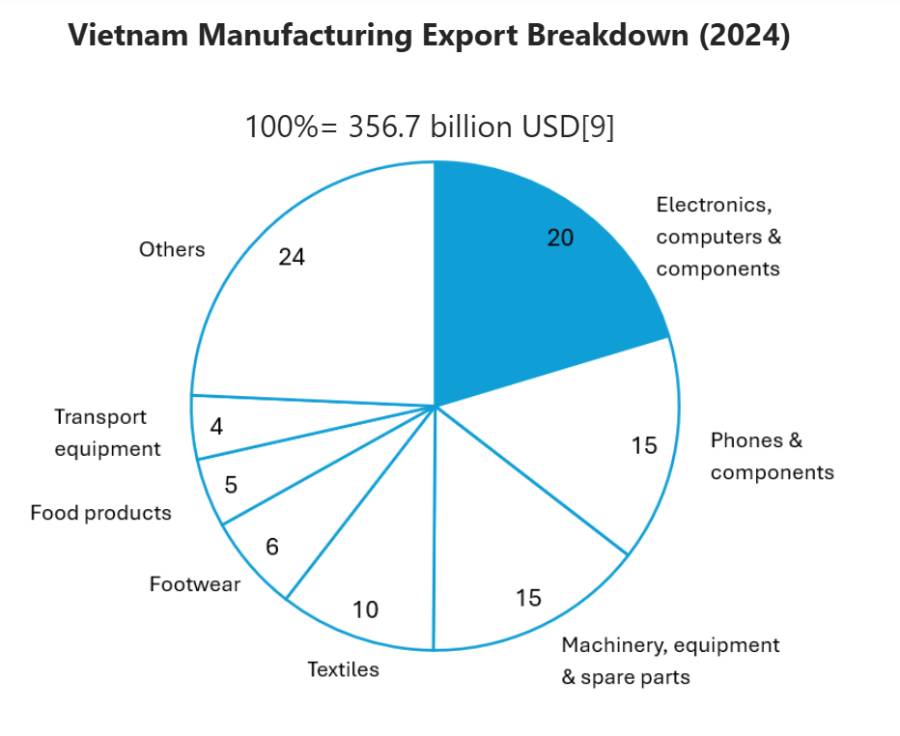
Vietnam’s manufacturing spans a broad mix of industries, from high-tech electronics to traditional sectors, offering one of the most diversified industrial bases in Southeast Asia.
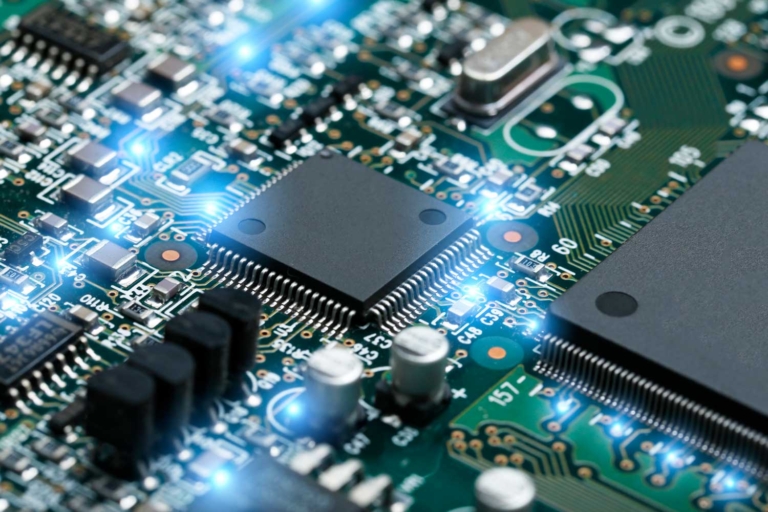
Electronics, phones, and machinery together account for over 40% of Vietnam’s total export turnover, driven by multinational giants like Samsung, LG, Pegatron concentrated in Northern Vietnam. Emerging sectors such as semiconductor, transport equipment, and high-value wood products also show steady growth, reflecting the country’s ongoing shift toward a more diversified industrial base.
Meanwhile, textiles, garments, and footwear remain strong traditional pillars, supported by skilled labor and extensive free trade agreements.
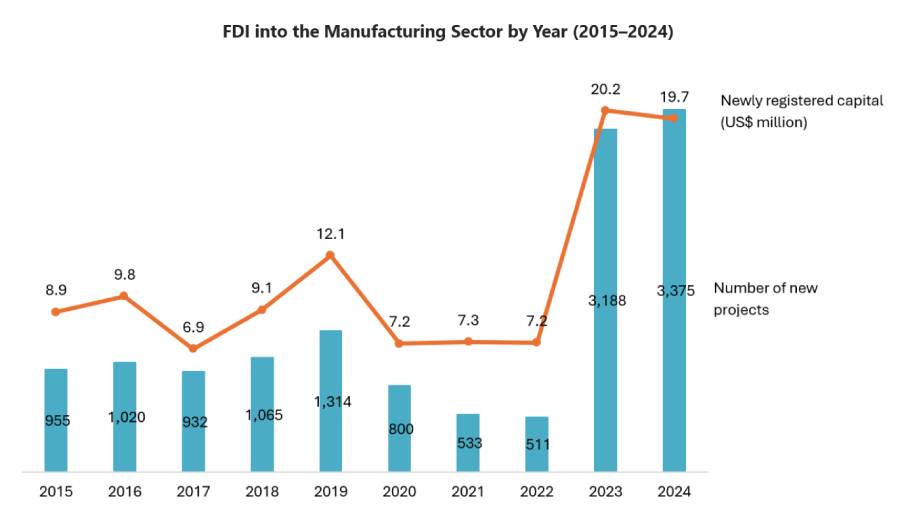
Vietnam’s manufacturing is strongly fueled by foreign direct investment (FDI). From 2015 to 2024, annual registered FDI into processing and manufacturing ranged between USD 7–10 billion, before surging to over USD 20 billion in both 2023 and 2024. Even during the Covid-19 pandemic years, FDI inflows into manufacturing remained resilient as global companies diversified away from single-country dependency.
In 2024, manufacturing was the largest recipient of disbursed FDI with USD 20.6 billion, and momentum has carried into 2025, with the first seven months attracting USD 24.1 billion in registered FDI, of which 61% (~USD 12.1 billion) went to manufacturing.
Recent investments include large-scale electronics, renewable energy component, automotive assembly, and high-tech component production projects. Leading investors from South Korea, Singapore, China, Japan, and Taiwan continue to anchor Vietnam’s shift toward advanced manufacturing.
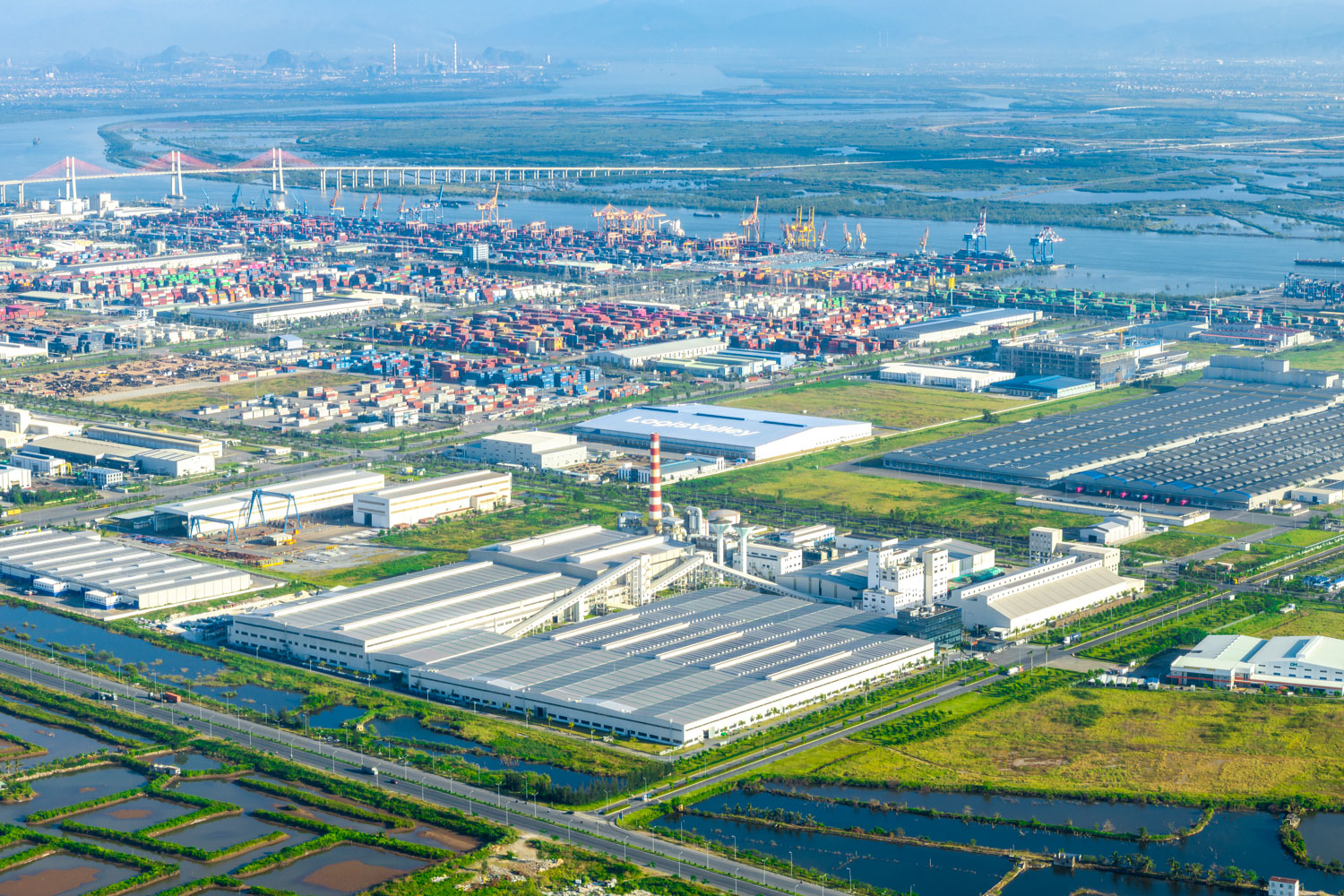
Choosing the right industrial park is critical for manufacturers expanding in Vietnam. DEEP C, an innovative industrial park, offers future-ready solutions for diverse manufacturing industries.
Case Study
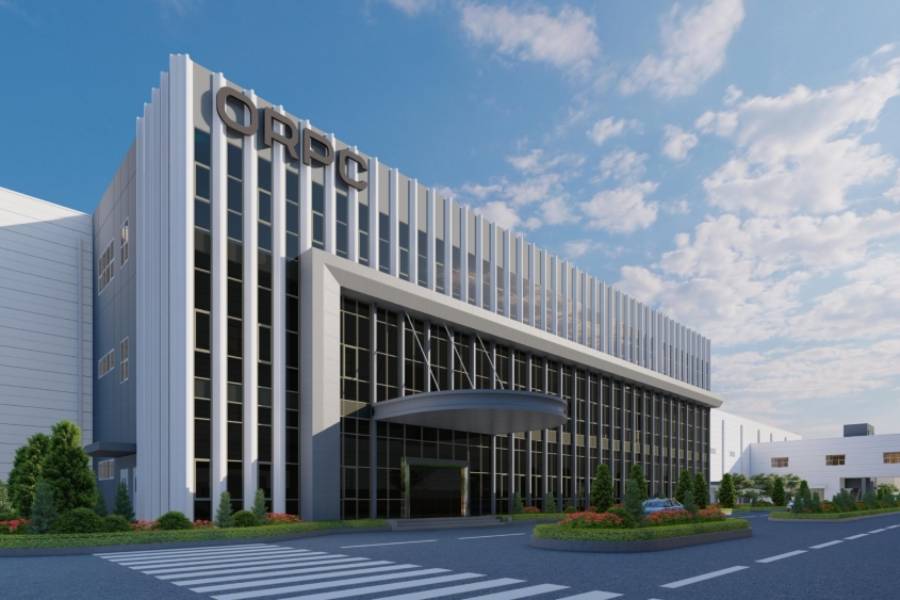
ORPC’s ambition of a more resilient Global Supply Chain with its new factory in DEEP C.
ORPC, a global manufacturer of inflatable watersports and leisure products, has strengthened its global supply chain with a large-scale production facility at DEEP C Hai Phong 2, enabling faster response to global demand, particularly from North America.
Key highlights: