Logistics & Industrial Real Estate
Driving Industrial Growth in Northern Vietnam
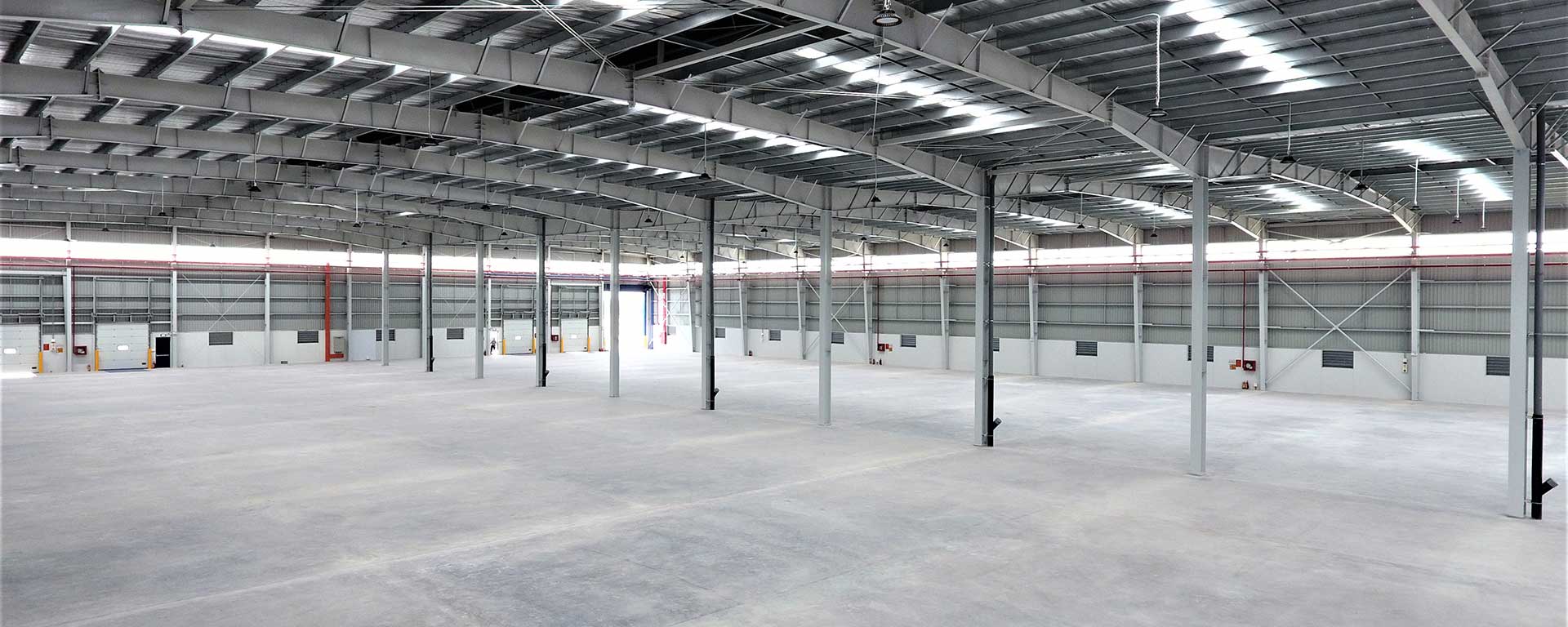
Driving Industrial Growth in Northern Vietnam
Despite global volatility such as shifting tariffs, geopolitical tensions, supply chain relocation, Northern Vietnam’s logistics & industrial real estate (IRE) market recorded another year of robust land take-up by manufacturers and factory operators, while ready-built facilities continued to see strong leasing demand.
As global manufacturers diversify production to strengthen resilience, Northern Vietnam has emerged as a strategic destination for logistics, warehousing, and industrial real estate developers, with Hai Phong and Quang Ninh at the forefront of this transition. Supported by large-scale infrastructure upgrades, port expansions, improved cross-border connectivity, and competitive operating costs, the northern industrial corridor is experiencing unprecedented demand from logistics and industrial real estate developers, driven by high-tech manufacturing investments.
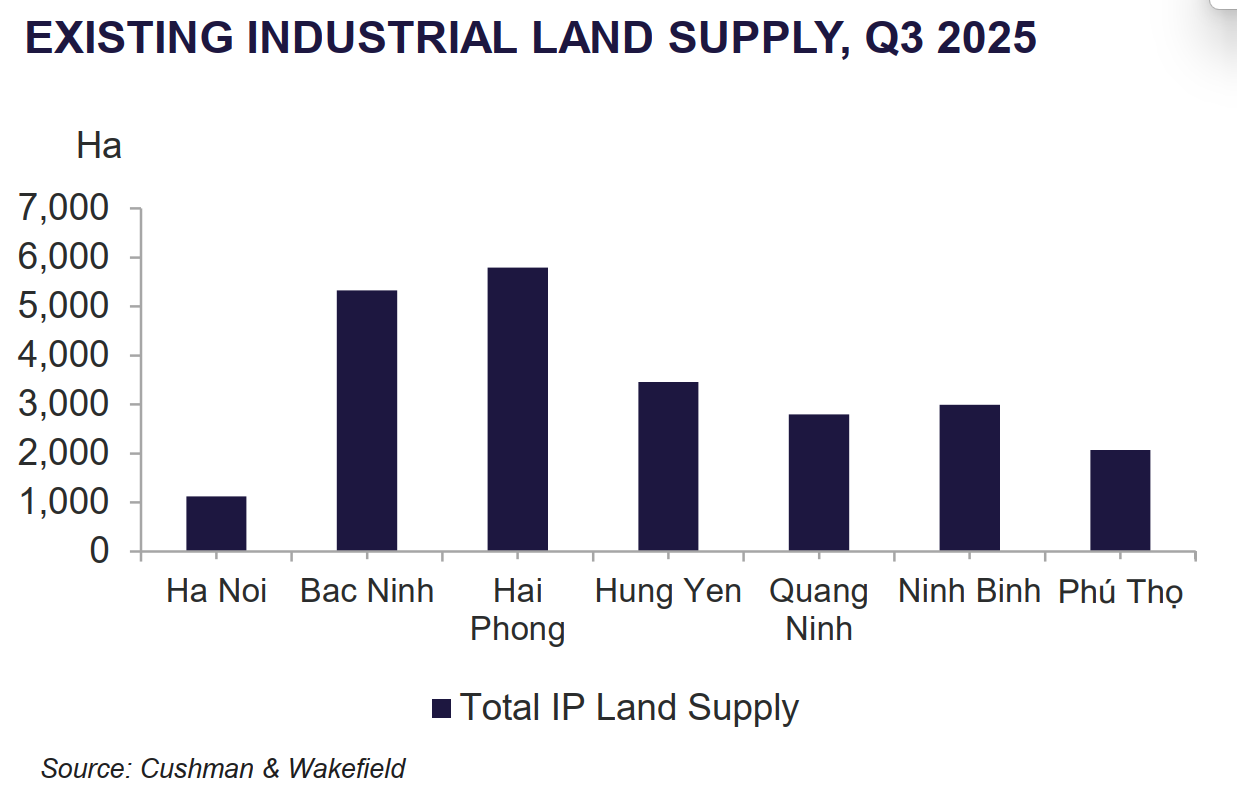
After the provincial merger, the total accumulated industrial land supply in the Northern Vietnam Economic Region reached 23,563 ha in Q3 2025 (Cushman & Wakefield). The market is expected to continue adding supply of approximately 6,500 ha of industrial land between 2025 and 2028.
The merger of provinces plays a key role in forming a continuous industrial economic belt, streamlining administrative procedures and optimizing resource allocation, creating more favorable conditions for large-scale investors. At the same time, major infrastructure projects, such as the Lao Cai – Hanoi – Hai Phong railway line, the widening of the North–South Expressway, will strengthen inter-regional connectivity, positioning Hai Phong and Quang Ninh as the logistics backbone of Northern Vietnam.
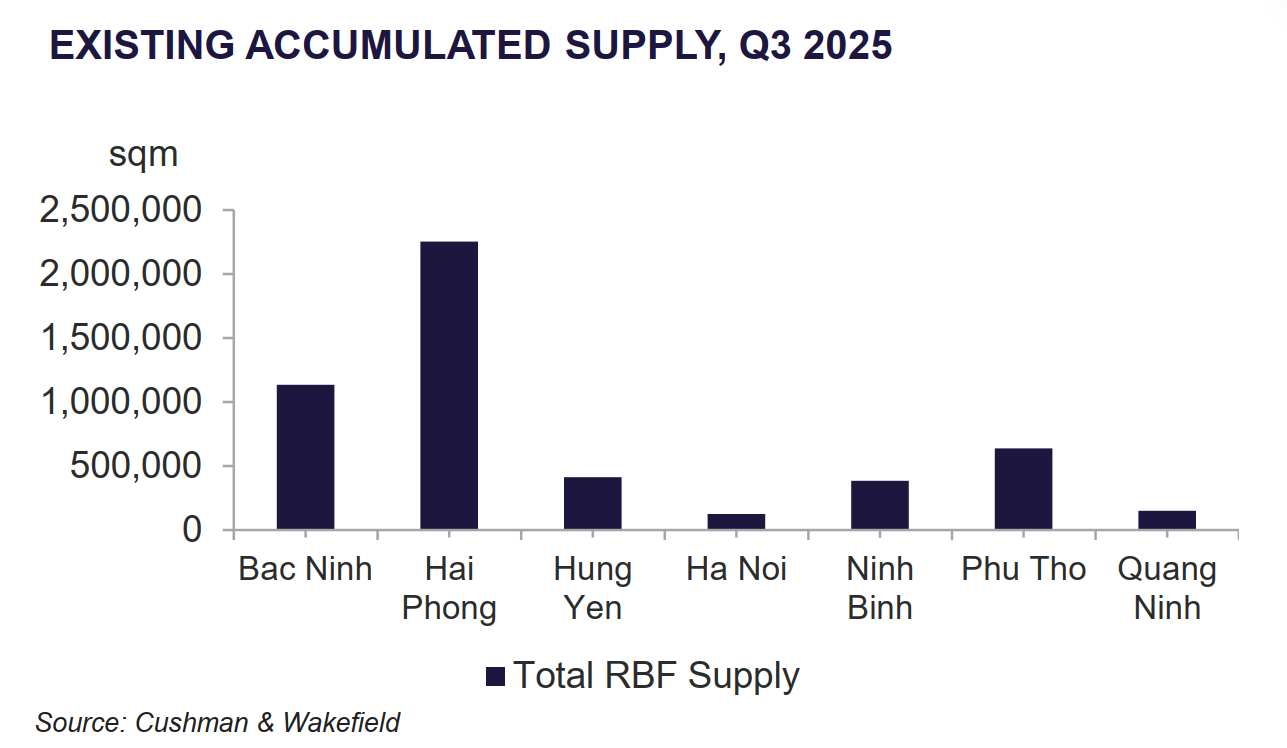
The occupancy rate of RBFs in Northern Vietnam reached approximately 87% in Q3 2025, even when the market absorbed nearly 100,000 sqm of new supply (Cushman & Wakefield). This indicates that demand is outpacing new supply, and all well-located projects are being leased quickly.
The Northern RBF market is expected to deliver around 900,000 sqm of new leasable factory space over the next three years to meet rising investment needs. RBF developers are increasingly shifting from warehouse to factory development, reflecting the region’s focus on higher value-added production rather than pure storage.
Provincial mergers create a favorable environment for sustainable RBF growth: expanding the suitable industrial land bank and ensuring more coordinated, reduced investment barriers. For RBF developers, the core value proposition remains clear: availability, scalability, and rapid deployment, all critical for manufacturers building supply chains in Northern Vietnam.
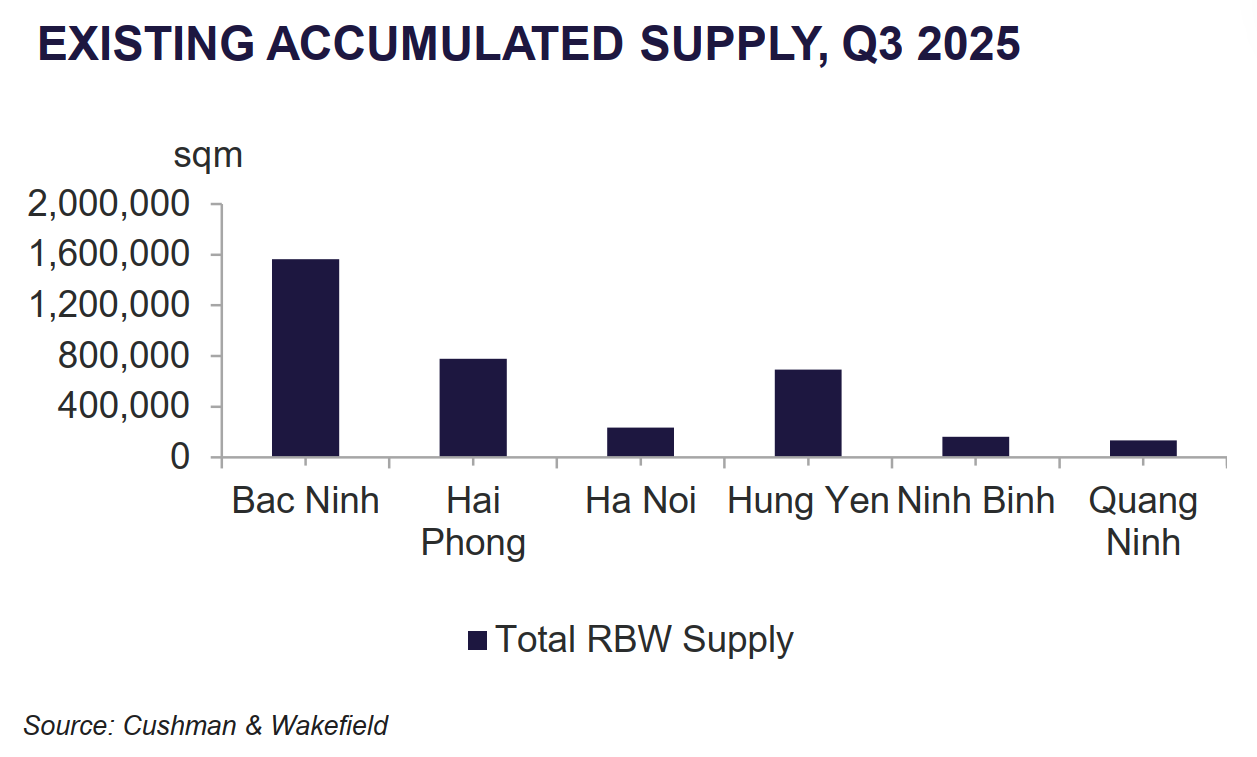
Following the administrative merger, the accumulated stock of ready-built warehouses in Northern Vietnam reached approximately 3.4 million sqm – a 7.6% increase from pre-merger levels. (Cushman & Wakefield, Q3 2025).
Over the next three years, the region is expected to add approximately 800,000 sqm of new RBW supply, with pipeline concentrated in Hai Phong and Quang Ninh, reinforcing the role of these localities as major international logistics gateways serving both manufacturing and import-export activities.
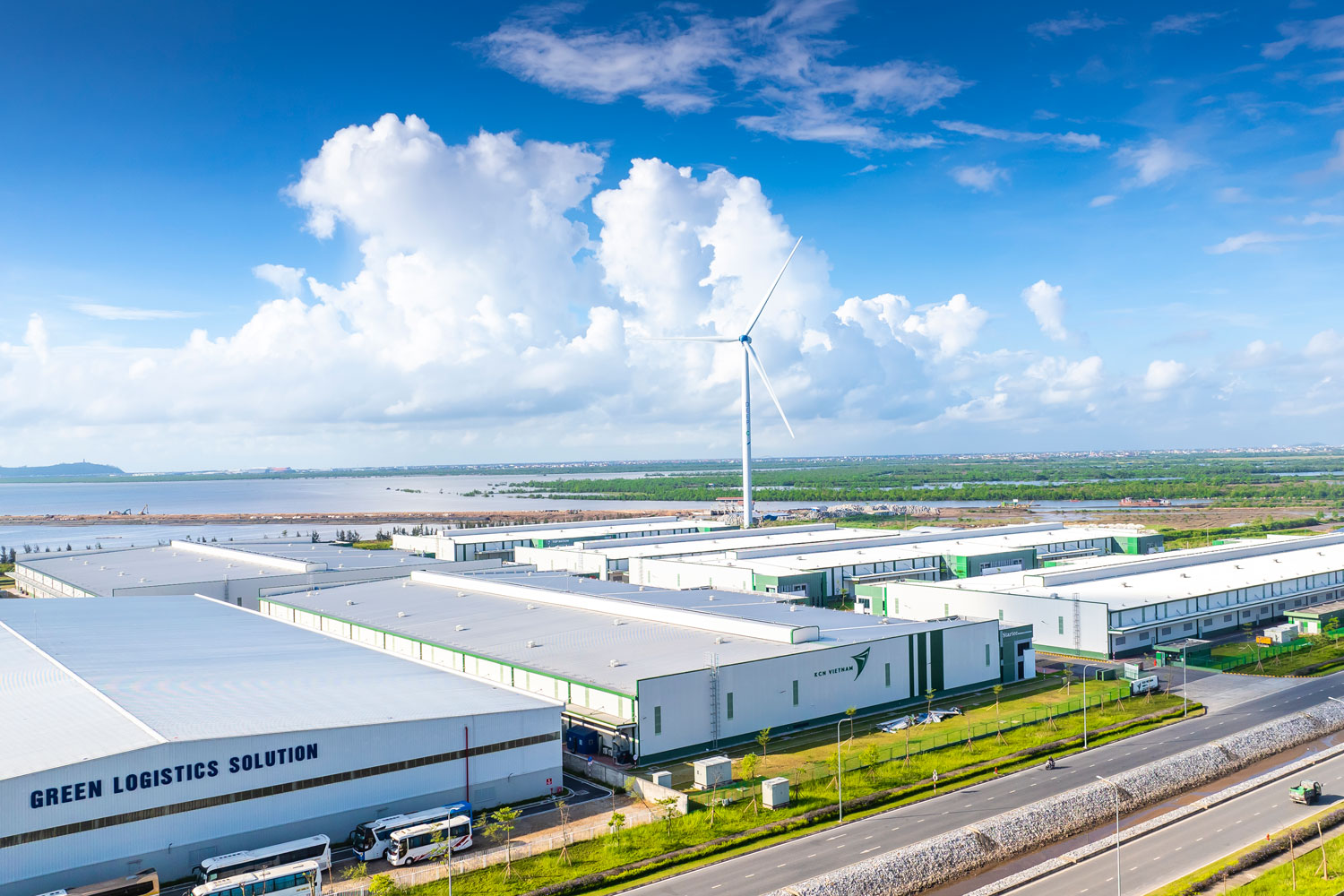
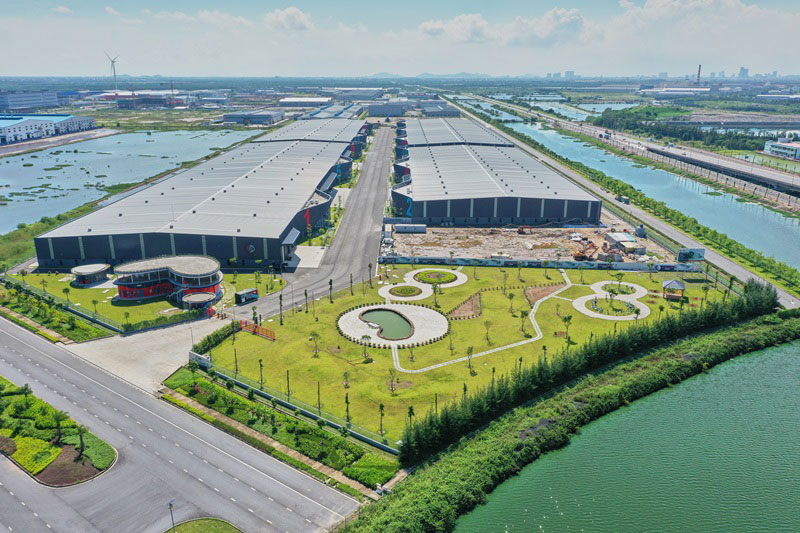
Adjacent to Lach Huyen deep seaport; Cat Bi international airport, Hai Phong – Hanoi – Lao Cai railway to China; Hai Phong – Quang Ninh – China border expressway, DEEP C offers one of the largest and most strategic landbanks in Hai Phong and Quang Ninh for industrial and logistics real estate development:
Case Study
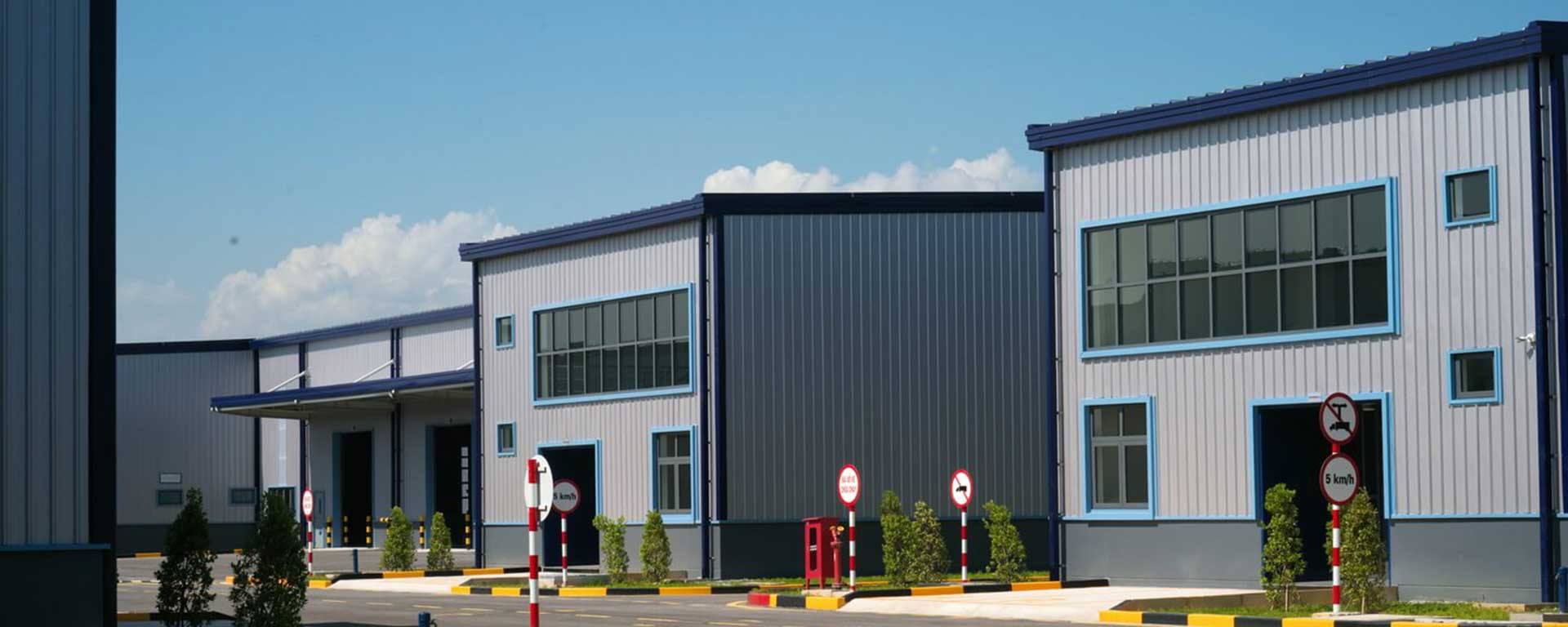
Core5 Vietnam: a flagship industrial real estate success in DEEP C
Key highlights: